

Fostering a Child of a Different Ethnicity or Faith
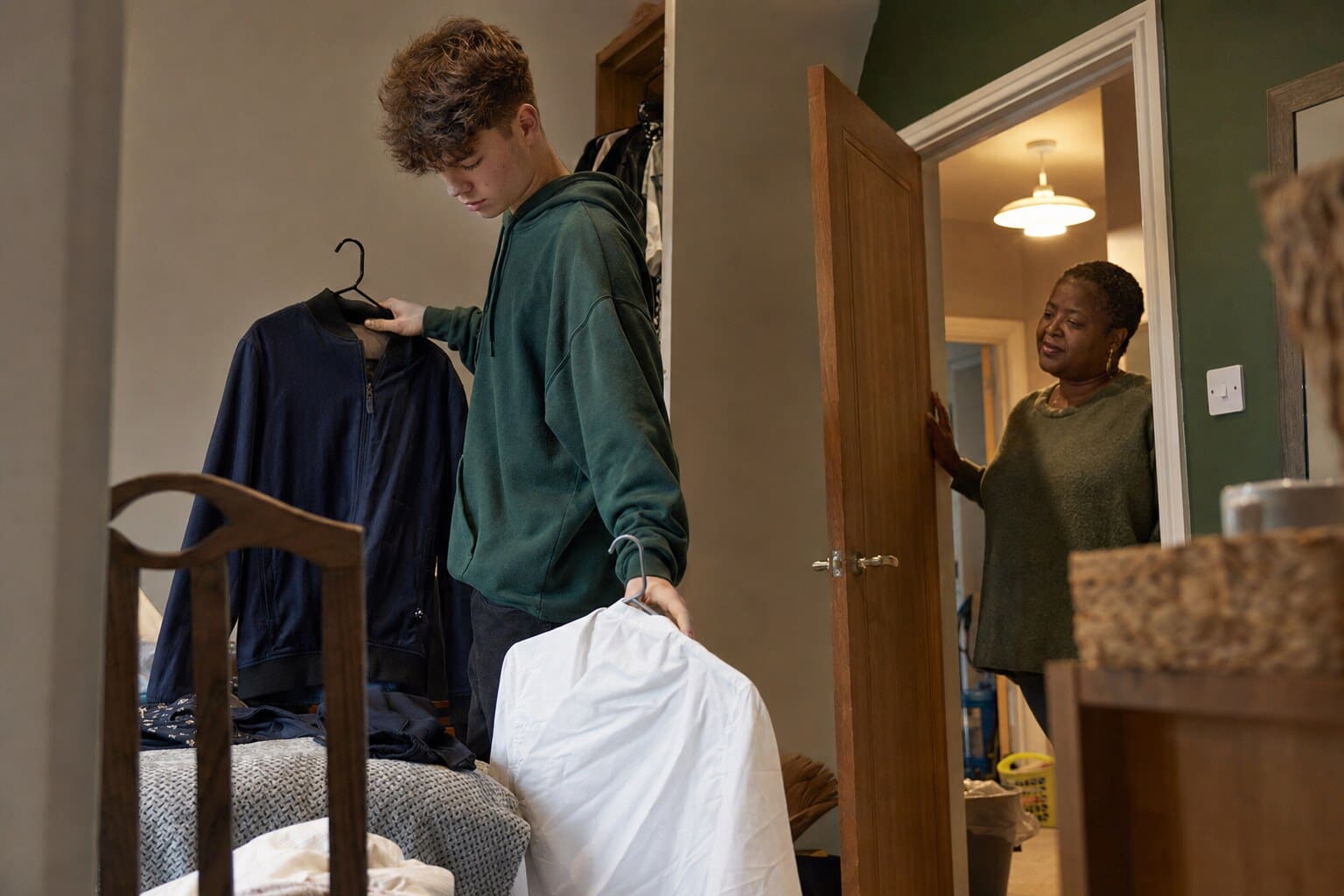
Most children who come into foster care are placed with someone whose background is not the same as theirs. That worries a lot of people who are thinking about applying. It is a fair worry, and it has practical answers.
Please note: this is general information about the law and about health, not advice about a particular child. Correct at 22 August 2026. The duty on placement decisions sits at section 22(5)(c) of the Children Act 1989. Sun protection advice follows NHS guidance.
Can you care for a child whose background is not your own?
Yes.
Agencies place children this way every week, because the alternative is often no placement at all. What matters is not whether you match a child on paper. It is whether you are willing to learn things you do not currently know, and to keep learning after the novelty has worn off.
If you are still working out what the role involves at all, start with what fostering actually is and come back to this.
What the law asks of the people making the decision
When a local authority decides where a child is going to live, it has to give due consideration to that child’s religious persuasion, racial origin and cultural and linguistic background. Those words are section 22(5)(c) of the Children Act 1989, and they are still in force.
Here is the bit that surprises people. In 2014 Parliament took that same wording out of adoption law in England. Section 3 of the Children and Families Act 2014 narrowed the duty so it now applies only to adoption agencies in Wales. Fostering was left alone.
So the two systems no longer work the same way. Anyone who tells you ethnicity stopped mattering in placement decisions is talking about adoption, not fostering.
Race is also one of the nine protected characteristics in the Equality Act 2010. Discrimination against the child is unlawful, at school and everywhere else.
How many children are we talking about?
- At 31 March 2024, 71 per cent of children looked after in England were recorded as White. The other 29 per cent were recorded as Mixed, Black, Asian or another ethnic group. Those are Department for Education figures, published by CoramBAAF.
- Ofsted counted 56,345 approved foster carers in England at 31 March 2025, down by 720 over the year.
- The Fostering Network reckons England is short of roughly 5,000 fostering families.
The arithmetic is not subtle. There are not enough households, and the households there are do not always look like the children who need them.
The mistake most new carers make
Treating a child’s culture as an occasion.
One festival in the diary, one takeaway on a Friday night, and a tick in a box at the next review. Culture is not an event. It is the food in the cupboard, the language spoken in the kitchen and whose face is on the book left open on the sofa.
Children notice which of those is missing long before they mention it. Some of that noticing is the same work as life story work: helping a child keep hold of who they were before they arrived.
Hair and skin are not a side issue
Our own training material for carers gives hair care as much space as first aid, and that is deliberate. Young people who grew up in care talk about their hair. They rarely talk about the paperwork.
Start with the hair type. Professionals classify hair from 1 (straight) through to 4 (coily), with subtypes such as 4a, 4b and 4c. Knowing the type tells you what to buy.
Afro-textured hair is usually drier, so it does not want washing often. Warm water rather than hot. Detangle while it is wet, with fingers or a wide-toothed comb, never a fine one. Oils or creams on the ends. A satin or silk pillowcase, or a sleep bonnet, saves a lot of damage overnight.
On skin, darker skin scars more readily and is more prone to patches of darker pigment after a spot or a bite, so it is worth gently heading off the picking. Sunscreen is for every skin tone: NHS advice is at least SPF 30 with at least 4-star UVA protection. Plasters come in more than one shade now, and Boots and Tesco both stock them. The rest of the health picture, from the initial health assessment onwards, sits in promoting the health of foster children.
One thing that catches carers out. You do not get to decide on your own to cut or relax a child’s hair. Check the care plan and ask your supervising social worker, and where birth parents hold a view about it, that view counts. A haircut is not a small thing when it changes how a child looks to their own family.
What to ask about food and worship
Ask early, and write the answers down.
- The exact religion, including the branch where that matters, such as Sunni or Shia for a Muslim child
- What praying at home needs: a space, and a quiet time of day
- Who takes them to the mosque, church, gurdwara or synagogue, and who goes with them if you cannot
- Which festivals fall in the next twelve months, so they go in the calendar before they arrive
- What they do not eat, and why
Language is easier than people expect. If a child’s English is limited, use pictures and gestures at first and let the school lead on formal support. If they speak a language you do not, learn ten words of it. Ten words changes the temperature of a room. There is more on this in our piece on fostering an unaccompanied asylum-seeking child.
What do you do the first time a child is on the receiving end of racism?
Not “ignore it”. And never “she probably did not mean it like that”.
- Say plainly that what happened was wrong and none of it was the child’s fault
- Report it to the school if that is where it happened, and tell your supervising social worker and the child’s social worker the same day
- Read the school’s bullying and racism policy before you need it, and find out how a complaint actually gets made there
Then rehearse. Out loud, at home, before it happens again. That includes the innocent questions, because those come more often than the cruel ones. “Why are you a different colour to your mum?” is answered perfectly well with “not all families look the same”.
A child who has already got an answer ready is not standing in a playground working one out from scratch.
Do you have to share a child’s background to care for them well?
No. But you do have to be honest about what you cannot give them from inside your own house.
A white carer in Norwich cannot teach a Black child what it feels like to be a Black adult in Norwich. What she can do is make sure the child knows people who can.
- a barber or hairdresser who works with that hair type as a matter of routine
- a place of worship, a supplementary school, a language class or a community group
- books and films where the main character looks like them
- adults of their background in ordinary jobs, not only in history lessons
Borrow what you have not got. That is not a shortcoming in the placement. That is the work.
You will not be doing this on your own
Our supervising social workers support around six families each. That is the difference between talking something through properly on a Tuesday and waiting until it has become a problem.
Children here get a pocket-sized card with contact details for raising a worry, so a child never has to come through you to be heard. Our Youth Council has written questions that get asked at the fostering panel. Our lead education consultant tracks how children are doing at school, which matters if a curriculum needs broadening or a school has handled a racist incident badly.
Ofsted inspected us in November 2024 and judged us good overall, with outstanding leadership and management. One carer told the inspectors: “My supervising social worker has been an absolute lifeline for me. I feel so much more confident in my role because of her.” A local authority commissioner described us as creative and child-centred.
You will get things wrong. Every carer does. The question is whether you have got somebody to ring about it.
If you are wondering whether you could do this, have a conversation with us first. You don’t need to decide today.
Or read more about how to apply to be a foster carer.
Frequently asked questions
Can I foster a child of a different religion to mine?
Yes. You are not asked to share a child’s faith, only to make room for it. That usually means practical things: knowing when the festivals fall, and getting them to a place of worship on the days it counts.
Do I need to speak a child’s first language?
No. Schools arrange language support, and translation apps cover the early days. Learning a handful of greetings and the words for food and bedtime goes further than you would think.
Am I allowed to cut a foster child’s hair?
Not on your own say-so. Check the care plan and speak to your supervising social worker first, because parental responsibility over things like haircuts is often shared or held elsewhere.
Will I get help paying for specialist hair or skin products?
Talk to your supervising social worker. Reasonable costs of caring for a child’s hair and skin are part of caring for the child, and they should be discussed rather than absorbed quietly.
Can I say no to a child whose background I do not think I can support?
Yes, and you should say so honestly. A placement that comes apart in three weeks does more harm than a carer who says at the start that they need more preparation first.


