

Will My House Pass the Fostering Home Safety Check?
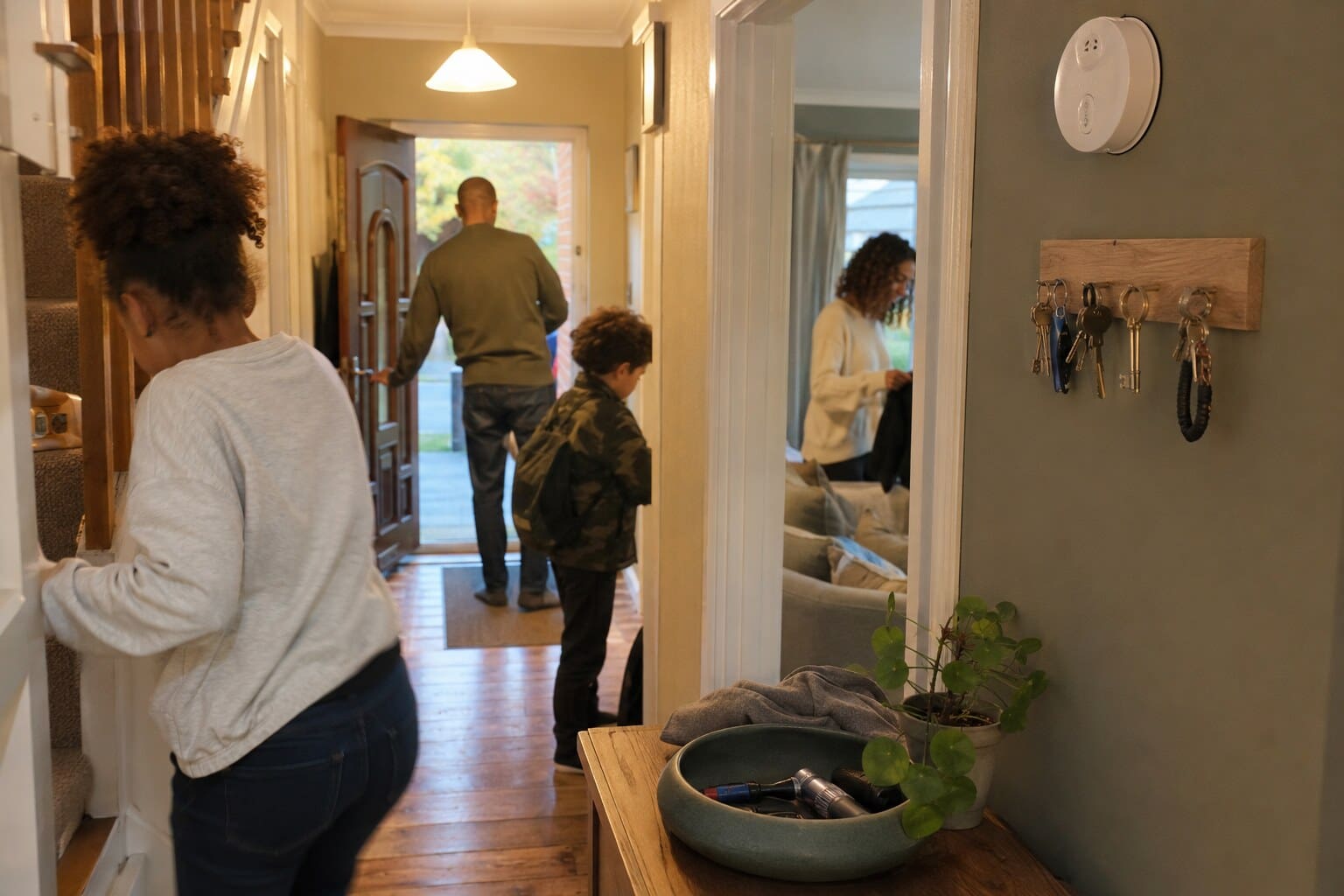
Most people picture a clipboard and a verdict. It is not that. The home safety check is a walk round your house with a social worker, working out together what needs changing before a child arrives. Almost always the list is short.
Please note: this is general information about home safety, correct at 26 August 2026, not advice about your particular house. Regulations and health guidance change. The sources we have used here are the Fostering Services National Minimum Standards, the Health and Safety Executive, the NHS, The Lullaby Trust, RoSPA and GOV.UK.
What is the home safety check?
It is part of your assessment, done well before you reach fostering panel.
Someone comes to the house. You walk through it together, room by room, then the garden.
They ask about stairs, windows, water temperature, where the medicines live, what is growing in the borders. You get a list at the end.
Will my house pass?
Almost certainly.
We are not looking for a show home. We are looking for a home where a child can be safe and can also relax. Those are two different things and the second one counts.
What actually gets flagged tends to be this small:
- a stair gate to buy
- a window with no restrictor on it
- bleach under the sink that needs to go up high
- a smoke alarm chirping on a flat battery
- a pond with nothing over it
None of that is a reason to stop. It gets written down, you sort it, we sign it off.
If something about your home cannot be made to work, you would hear it from us early and plainly, rather than at panel.
Stairs, windows and falls
- A handrail on every staircase, fixed properly to the wall.
- Stair gates matter most for the very young. RoSPA advises wall-mounted gates at the top and the bottom of the stairs for children under 24 months.
- Restrictors or locks on upstairs windows, of the sort an adult can release and a child cannot.
- Nothing climbable under a window. A toy box below a bedroom window is a step up.
One thing our own factsheets miss, and should not: looped blind cords. RoSPA has campaigned on these for years. Cut the loop, fit a cleat or a breakaway connector, and tie the cord high.
Water, medicines and the bathroom
Hot taps scald faster than people expect. The Health and Safety Executive says water hotter than 44C should not come out of an outlet where someone vulnerable could be immersed in it, which in practice means the bath. A thermostatic mixing valve is the usual fix and a plumber will fit one in an hour.
- Medicines, including your own, out of sight and reach. A locked cupboard is better than a high shelf.
- Razors and cleaning products the same.
- No sockets in the bathroom.
- Never leave a young child in the bath, not for a minute.
Alarms and fire
At least one working smoke alarm on every storey of the house, fixed to the ceiling. Test them weekly.
Carbon monoxide matters too. In rented homes, the law since 1 October 2022 has required a carbon monoxide alarm in any room with a fixed combustion appliance, so a boiler, a log burner or an oil heater. Gas cookers are the exception. If you own your home nobody is compelling you, and you should still fit one.
Both of the factsheets we train carers on were written in 2020 and 2021, and neither mentions carbon monoxide once. That is exactly the sort of gap a fresh pair of eyes on the house is for.
- A fire blanket in the kitchen, not a jug of water.
- A guard on an open fire.
- Fire extinguishers in date, if you keep them.
- A plan everyone knows: out, door shut behind you, 999.
Where a child sleeps
A child of school age needs their own bedroom. A baby is different.
A baby under two can sleep in a cot in your own room, which is why a spare bedroom is not always essential for a baby-only placement. Most of our area is rural, so being able to drive usually matters more.
The Lullaby Trust is the authority on the cot itself. On the back, every sleep. A firm flat mattress and lightweight bedding, and nothing else in there: no pillow, no duvet, no bumpers, no pods or nests. Room temperature between 16 and 20C.
The kitchen and choking
The NHS is specific about food, and more specific than most people are at home:
- Cut grapes, cherries, berries, strawberries and cherry tomatoes into quarters.
- Chop or flake whole nuts. No whole nuts and no popcorn under the age of five.
- Sit with a small child while they eat.
- Button batteries and small magnets right out of reach. Swallowed, they burn.
Worth saying that our two factsheets disagree here. The older one says do not give grapes at all; the newer one says quarter them. The NHS line is quarters, and that is the one to follow.
Outside, and in the car
- Gates and outside doors locked or barred so a small child cannot let themselves out.
- A pond covered, fenced or filled in. A sandpit covered when nobody is in it.
- Poisonous berries out of the borders.
- Power tools locked away.
In the car, a child must normally use a child car seat until they are 12 years old or 135cm tall, whichever comes first. Check with us about the right seat for the child coming to you, and ring your insurer to confirm you are covered to carry them.
On sun, the NHS asks for shade between 11am and 3pm from March to October, at least factor 30 with four-star UVA protection, and babies under six months kept out of direct sunlight. Our factsheet says factor 50. That is no bad thing, but 30 is the floor.
What about the dog?
Dogs are fine. So are cats and rabbits.
A pet gets its own short assessment rather than a yes or no, and plenty of children settle faster with an animal in the house than without one. We have written more on pets and fostering.
The rules that come out of it are usually simple. No child left alone with an animal. Food bowls and litter trays out of the way. Show a new child how your dog likes to be approached, and what it does not like.
Does it happen again after approval?
Yes, and you should want it to.
The National Minimum Standards require the fostering service to inspect a foster home once a year without an appointment. That is the unannounced visit, and it catches the flat alarm battery nobody noticed.
You will also need a fresh check if you move house. Households renting sometimes worry about this; it is routine, and moving is no barrier to fostering in a rented home or a flat.
You will not be doing this on your own
Nobody hands you a list of forty jobs and walks out.
Your supervising social worker walks the house with you, tells you what matters most and what can wait, and helps you turn the safety side of it into house rules a child can actually live with. Ours support around six families each, which is why they know your stairs and your dog by name.
Ofsted inspected us in November 2024 and rated us good overall, with outstanding leadership and management. One carer told the inspectors: “My supervising social worker has been an absolute lifeline for me. I feel so much more confident in my role because of her.”
Wondering whether your house would work? Tell us about it and we will tell you honestly. You don’t need to decide today.
Or read more about how to apply to be a foster carer.
Frequently asked questions
Do I need a spare bedroom to pass the home safety check?
Not always. A child of school age needs a bedroom of their own, but a baby under two can sleep in a cot in your room, so baby-only carers can be approved without a spare room. In a rural part of Norfolk or Suffolk you would usually need to be able to drive.
What if something cannot be fixed?
Then we talk about it. Sometimes it changes what a home is best suited to rather than ruling anything out, and you would know early rather than at the end. Decisions about approval rest with the fostering panel and the agency decision maker, not with the home check.
Do I have to fit stair gates?
Only if the age of the child needs them. RoSPA advises wall-mounted gates at the top and bottom of the stairs for children under 24 months.
How hot is too hot for bath water?
The Health and Safety Executive says water hotter than 44C should not be available at an outlet where a vulnerable person could be immersed in it. A thermostatic mixing valve is the usual answer.
How often will my home be checked after I am approved?
At least once a year, and without an appointment, which is what the National Minimum Standards require. You would also have a new check if you moved house.


