

How Do You Help a Foster Child Learn to Trust You?
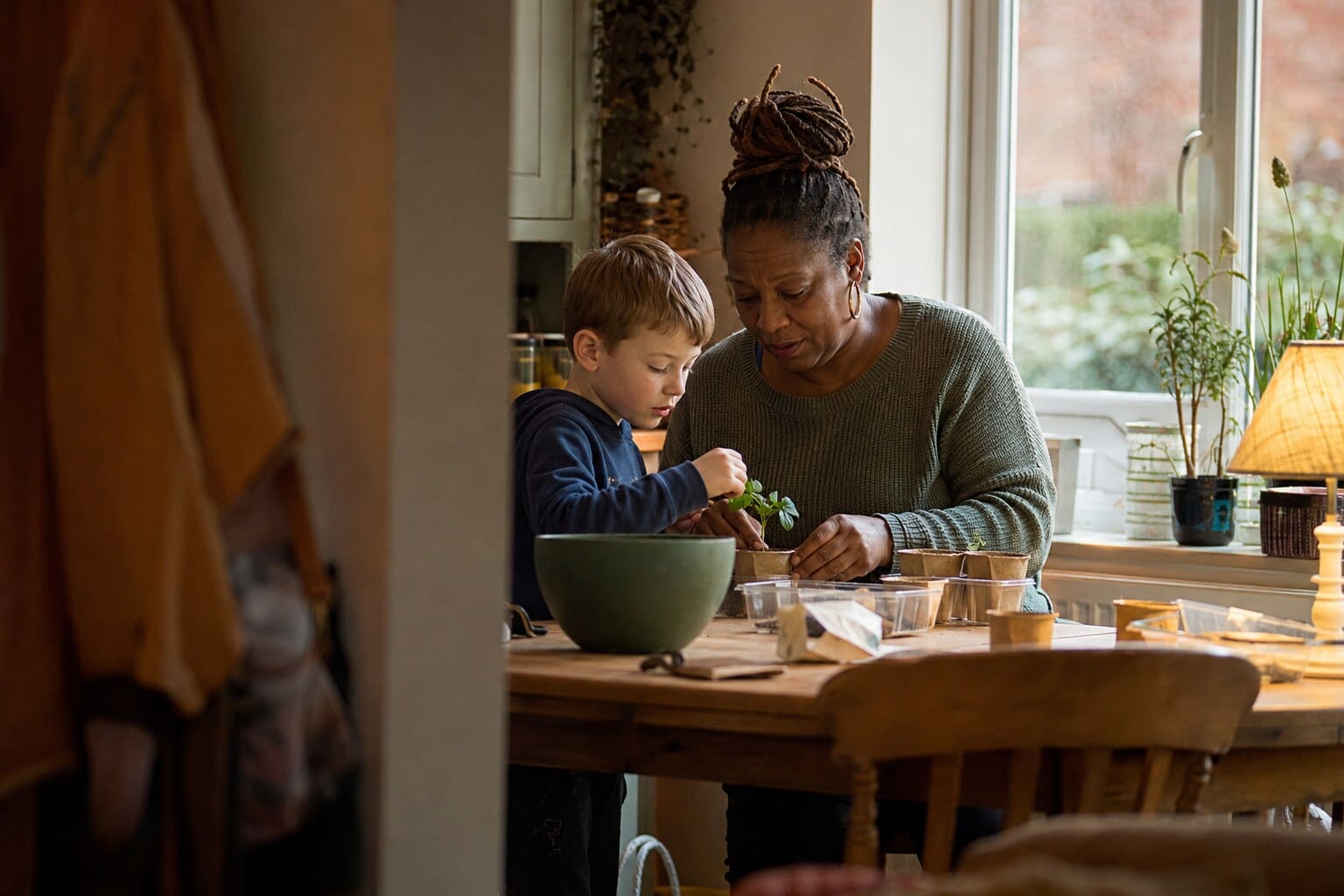
Trust does not arrive on day one. For a child who has been let down before, it has to be earned, slowly, in small ordinary moments. Here is what that looks like, and what helps.
Please note: This article gives general information about attachment and child development, not personalised advice about a specific child. If you are worried about a child’s wellbeing, speak to your supervising social worker or the child’s own social worker. Correct as of August 2026. See NSPCC Learning on attachment and child development.
What Does “Attachment” Mean?
Attachment is the bond a child builds with the adults who care for them.
It is built through thousands of small exchanges. A cry answered. A hug offered. A promise kept. Over time, the child works out whether the world is safe and whether the adults in it can be relied on.
A 2023 review of over 20,000 children, published in Psychological Bulletin, found just over half develop what researchers call a secure attachment. Most children, in other words, grow up trusting the adults around them without having to think about it.
Not every child gets that start. And attachment is not something that only matters for babies. A ten-year-old who has moved home twice is still working out the same question: can I count on you?
Why Trust Can Take Longer for Some Children
A child who has moved between homes, or whose early care was unpredictable, learns different lessons.
They might learn that asking for help does not work. That adults leave. That it is safer to manage alone than to rely on someone who might not stay.
That is not a character flaw. It is a sensible response to an unpredictable start, carried into a home that is, finally, predictable. It can look like:
- Watching every adult closely, waiting for something to go wrong
- Struggling to accept affection, or flinching away from it
- Testing a new carer, sometimes hard, to see if this one will stay too
- Finding it difficult to say what they need, or even to know
- Being fiercely independent for their age, refusing help they clearly need
None of this is the child being difficult. It is a child who learned to protect themselves, and hasn’t yet learned they don’t need to any more. Our piece on understanding behaviours goes into this in more depth, including why behaviour is so often the way a child communicates what they cannot yet say in words.
The Secure Base: Five Things That Help
Fostering research by Professor Gillian Schofield and Dr Mary Beek at the University of East Anglia, now used widely across UK fostering practice through CoramBAAF, sets out five things a carer can offer a child who is learning to trust again. It is not a checklist to complete once. It is a way of showing up.
- Availability. Being there, and staying there, so the child learns you can be counted on, even on the days they push you away.
- Sensitivity. Noticing what a child feels, even when they cannot say it, and responding to the feeling rather than just the behaviour.
- Acceptance. Valuing the child as they are, struggles included, not as the child you wish they’d become.
- Co-operation. Letting the child have a say in small things, so they feel capable rather than managed.
- Family membership. Making sure they feel part of the household, not a guest passing through it. A photo on the wall. A stocking at Christmas. A seat that is theirs.
None of these require perfection. They add up slowly, over months, not days.
What This Looks Like on an Ordinary Tuesday
It is rarely dramatic.
It is sitting on the floor doing a jigsaw and letting the child lead. It is the same bedtime routine, night after night, so a child stops bracing for it to change. It is noticing that a child goes quiet before school pick-up, and gently asking why, rather than assuming they are just being awkward.
It is also the boring bits. Being home when you said you would be. Not raising your voice when a child says something designed to make you angry. Turning up to the parents’ evening even when the child insists they don’t care whether you come.
As you learn a child’s particular triggers, your safer caring plan should grow with them. What unsettles one child, like a raised voice from the next room, might mean nothing to another.
Some children want to talk about where they have come from. Others need time first, sometimes a long time. Either way, that work only happens with the child’s own social worker involved, never alone and never without permission. Our guide to life story work covers how that is usually handled.
When a child pushes you away, it can sting.
Try not to take it personally. It is very rarely about you. It is about every adult who came before you.
What If I Get It Wrong?
You will. Everyone does.
You will misread a moment, raise your voice when you meant to stay calm, or miss a signal a child was sending. That does not undo the work.
What matters more than any single moment is the pattern underneath it: that you keep showing up, that you repair things when they go wrong, and that the child slowly learns this home is different from the ones before it. Attachment is built in the repair as much as in the calm days.
You will not be doing this on your own
Building trust with a child who has learned not to expect it is slow, patient work. Most carers say it is also some of the most rewarding they have ever done.
You are not left to work it out alone. Fostering Hearts pairs every carer with a supervising social worker, who supports around six families each, so you are never chasing someone you have never met. Training in attachment and therapeutic parenting is built into your first year and beyond, and there is always someone on the other end of the phone when a Tuesday goes badly. Read more about the support that surrounds every foster carer here.
Fostering is not about being perfect. It is about being present.
Wondering if you have what it takes? A conversation costs nothing.
Or read more about how the fostering application process works.
Frequently asked questions
Do all children in foster care have attachment difficulties?
No. Every child is different, and plenty settle and bond quickly. Others need much longer. Both are normal.
Can a child build a secure attachment after coming into care?
Yes. Attachment is not fixed for life. With a stable, patient carer, children can and do learn to trust again, even after a difficult start.
What if a child pushes me away or seems to reject me?
It happens, especially early on. It is usually the child testing whether you will leave too. Staying steady, without forcing closeness, is what helps most.
Do I need specialist training before I can foster a child with attachment difficulties?
You do not need to be an expert before you start. Skills to Foster covers the basics, and Fostering Hearts builds on that with ongoing training and a supervising social worker who knows you and the child.
How long does it take for a foster child to trust their carer?
There is no set timeline. Some children settle within weeks. For others it takes years, and trust can wobble even after it seems established. Consistency matters more than speed.


