
A child in your home who slams a door, shouts, or goes quiet and cold isn’t telling you fostering has gone wrong. They’re usually telling you something happened long before they met you. Here’s what that anger can look like, and what actually helps.
Why Does a Child You’re Caring For Get So Angry?
Anger on its own isn’t a problem. Every child feels it.
It becomes one when it turns into behaviour that hurts them or the people around them: lashing out, breaking things, or turning the anger inward instead.
For a child who has already lost people, homes, or a sense of who’s in charge of their own life, anger rarely starts with what’s right in front of them. A missed goodbye. A house move. A raised voice at dinner that sounds like one they remember from somewhere else.
How they cope with that feeling depends on what they’ve already lived through, and what anger looked like in the home they came from. Maybe shouting was how every disagreement got settled. Maybe going quiet was the only safe option. Either way, they arrive with a rulebook you didn’t write and can’t see.
Why trust takes time to build explains a lot of what sits underneath it.
Is This Normal?
Often, yes.
A five-year-old melting down over the wrong colour cup is ordinary. A fifteen-year-old melting down over the same thing usually isn’t, and needs a different kind of attention.
If anger is one of several behaviours you’re trying to make sense of, our guide to understanding behaviour in foster care is a good place to start.
Watch for anger that keeps getting worse no matter what you try, or that turns up alongside other worries you can’t quite name. That combination is worth mentioning to your supervising social worker rather than waiting to see if it settles on its own.
What Are the Warning Signs?
Most children give some kind of warning before anger takes over completely.
- Clenched fists or a tight jaw
- A voice that gets louder, or suddenly goes flat
- Pacing, or an inability to sit still
- A kind of quiet that feels different from their usual quiet
Learn a child’s own signs early. They’re rarely the same from one child to the next, and a sign that means “getting cross” in one child might mean “shutting down” in another.
What Can You Do Before It Boils Over?
Most of the useful work happens before anger ever arrives.
- Learn their specific triggers, so you can prepare them for what’s coming or steer around it altogether
- Find two or three distraction techniques that work for that particular child. A run round the garden works for some. A colouring book works for others. There’s no single right answer.
- Notice the early warning signs and step in gently, before things escalate
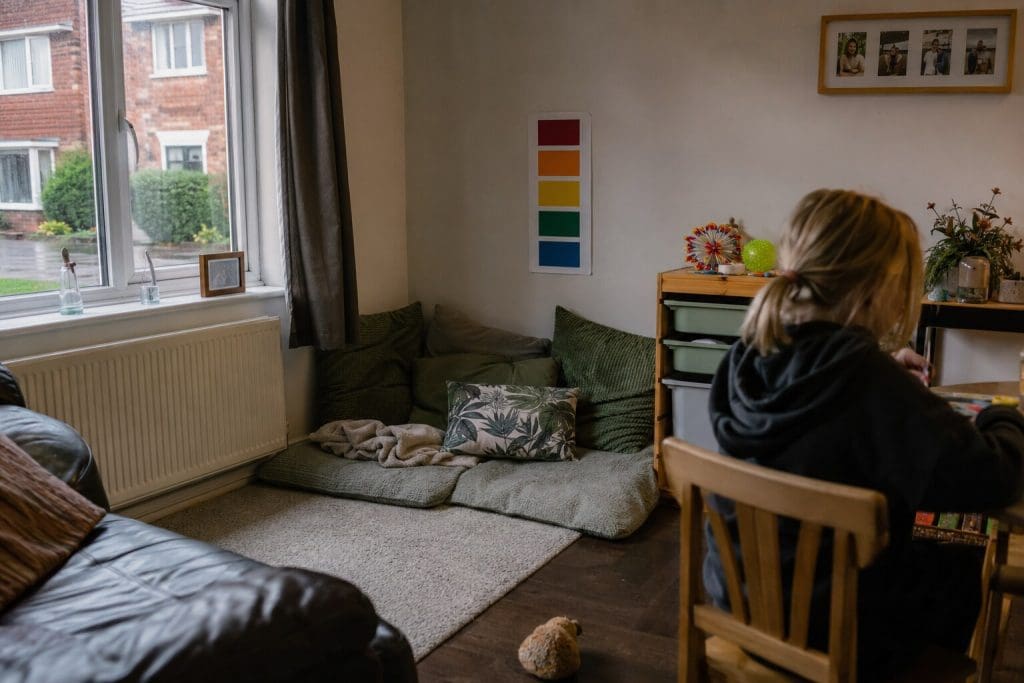
- Keep a quiet space in the house they can go to, not as a punishment, but as somewhere to land
Write down every outburst afterwards while it’s fresh: what happened, what led up to it and what was said. What foster carers have to write down explains what your supervising social worker needs from those notes, and why they matter more than they might seem to at the time.
What Do You Do In the Moment?
With a younger child, don’t try to reason your way through it. A five-year-old mid-meltdown can’t process logic any better than an adult mid-panic attack can.
Get down to their level. Tell them you’re there. Give them room to feel it rather than rushing to shut it down.
Once they’re calmer, a picture chart or a book about feelings can help them find the words for what just happened. This is part of what foster carers call the PACE approach, playfulness, acceptance, curiosity and empathy, and it’s worth reading properly rather than picking up secondhand.
What About Teenagers?
A different approach altogether.
Give a teenager space if they ask for it, as long as you can still see they’re safe.
Stay calm yourself. Breathe. Don’t let their fight-or-flight become yours too.
If things escalate to the point where you’re worried about anyone’s safety, say clearly that you’ll call the police if it doesn’t stop, and mean it if you say it. Then call your supervising social worker or the out-of-hours line straight after, whatever time it is.
What Should You Never Do?
A short list, because some of this matters more than the rest.
- Don’t compare the child to anyone else, out loud or in your own head
- Don’t shout back. It teaches them that shouting is how grown-ups solve this.
- Don’t step in physically unless it’s genuinely to keep someone, or something, safe
- Don’t take what they say personally. Anger says things it doesn’t mean, and it’s rarely about you.
If you ever lose your temper, tell the child afterwards. Let them see that grown-ups make mistakes too, and that you can own it without falling apart. They’re not naughty, they’re hurting is worth reading alongside this one, if a child’s behaviour makes more sense once you understand what’s underneath it.
When Do You Ask for Help?
When you’ve tried the usual things and it isn’t settling.
When the anger has been going on for weeks rather than days.
When you notice you’re starting to dread bedtime, or dinnertime, or whatever the trigger point has become.
Your supervising social worker reads your recordings and can help you spot patterns you’re too close to see yourself. Sometimes that leads to a conversation with the child’s GP about extra support. That’s not a failure on your part. It’s the system working the way it’s meant to.
Asking early usually means a smaller conversation than asking late. A quick call about a rough week is easier for everyone than a crisis meeting three months in.
You will not be doing this on your own
Every foster carer at Fostering Hearts has a supervising social worker who knows their family and picks up the phone when things get hard, not just during office hours.
You’ll have training on managing a child’s anger before a child ever moves in, and ongoing support once they have. Nobody expects you to work this out from a leaflet.
Other foster carers in your area have sat exactly where you’re sitting, wondering if a slammed door meant they’d failed somehow. It doesn’t. It usually means the opposite.
Thinking about becoming a foster carer? You don’t need to decide today.
Or read more about what support you get as a foster carer.
More on feelings and behaviour: lying and stealing · sleep · bedwetting · grief and loss · therapeutic play
Frequently asked questions
Is it normal for a foster child to get angry with their foster carer?
Yes. It often means they feel safe enough to show you how they really feel, which is a strange kind of progress even when it doesn’t feel like one.
Should a foster carer ever step in physically to stop an angry child?
Only to keep them, someone else, or property safe. If it happens, write it down and tell your supervising social worker straight away.
What if a child’s anger frightens me?
Say so. Your supervising social worker would rather hear from you early than find out weeks into a struggle you kept to yourself.
Will I get support if a child’s anger becomes a serious problem?
Yes. Your supervising social worker can help you access extra support, including a conversation with the child’s GP if it’s needed.


