
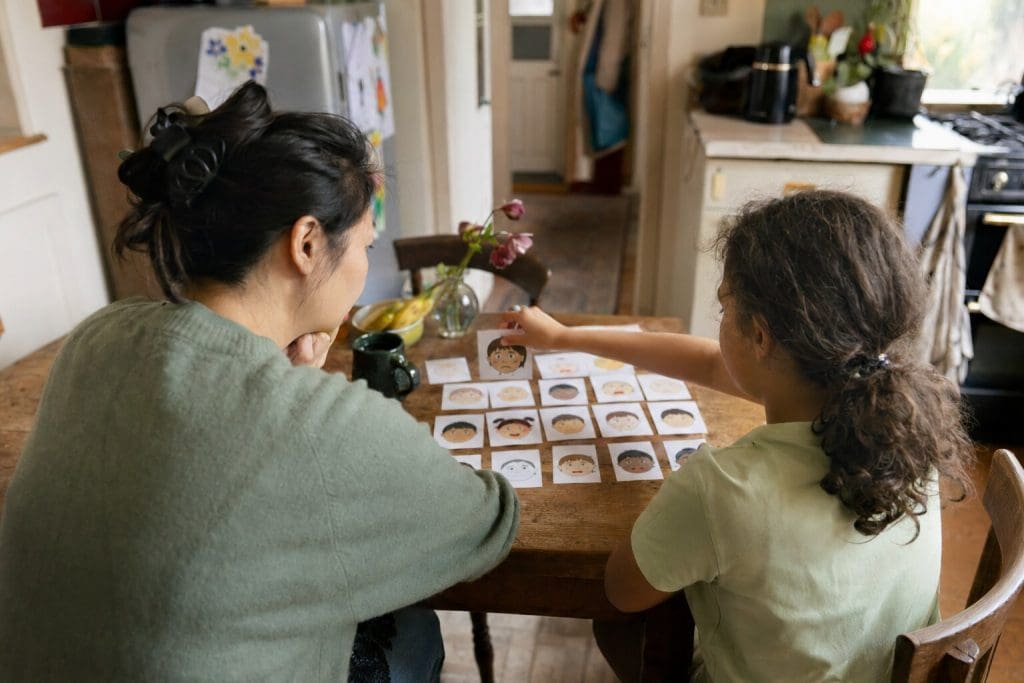
Every child worries sometimes. For a child who has been through more change and more loss than most, worry can tip into something that takes over a whole day. Here is what that looks like in a foster home, and what actually helps.
Please note: this article gives general information, not personal advice. It reflects NHS guidance current as of September 2026. For advice about a specific child, speak to their GP or your supervising social worker. See the NHS’s own page on anxiety in children.
What Does Anxiety Look Like in a Child?
Anxiety does not always look like worry. In a child it can look like a stomach ache before school, or a meltdown over a shoe that will not tie right.
It shows up in the body as much as the mind, which is worth reading up on in its own right (see Why Somatic Awareness Matters). A child might grip the car door and refuse to get out at the school gate. They might ask the same question six times in ten minutes, not because they did not hear the answer, but because asking is the only thing that settles them for a moment.
- Trouble sleeping, nightmares, or not wanting to be alone at bedtime
- Stomach aches, a racing heart, or sweaty palms with no obvious cause
- Avoiding school, clubs, or new people altogether
- Snapping, crying, or going very quiet when nothing seems to have happened
- Checking or asking the same question again and again
None of this means a child is being difficult. Our own guide to understanding behaviours covers why a child’s actions often say more than their words.
Is It Normal for a Foster Child to Feel Anxious?
Yes.
More children are being referred for it than ever before. Anxiety was the main reason behind 204,526 new referrals to children’s mental health services in England in 2023 to 2024, more than double the 98,953 recorded in 2019 to 2020, according to the Children’s Commissioner for England’s analysis of NHS data.
A child who has moved home, changed school, or is waiting to find out what happens next has more on their mind than most. That does not mean something has gone wrong in your home. It means they have more to carry, and carrying it takes energy that used to go somewhere else.
What Can You Do When a Child Feels Overwhelmed?
Start by naming it. Tell the child that anxiety is a normal feeling everyone has sometimes, even when it does not feel that way from the inside. It is the same idea behind PACE parenting: curiosity and acceptance before anything else.
A fixed spot can help too: a corner with a beanbag, a soft blanket, somewhere the child knows is theirs when things get too much. It does not need to be a whole room. A landing, a cupboard with the door left open, a spot by the window will do.
Then try one of these, together.
- A slow breath in for a count of five, then out for five, repeated for a few minutes. It is the NHS’s own technique for calming a racing body.
- The five senses: name five things you can see, four you can hear, three you can touch, two you can smell, one you can taste.
- A worry box: a tin or a tub the child fills with things that calm them, ready before the next wobble.
- A walk, a run, or ten minutes in the garden.
- A steady bedtime and mealtime routine. Routine is reassuring even when nothing else feels certain.
Watch the caffeine and sugar too. Both can make a racing heart feel worse, right when you are trying to calm it down.
What About Panic Attacks?
A panic attack usually lasts somewhere between five and thirty minutes, though it can feel much longer to the child going through it. The heart races. The chest feels tight. Breathing feels hard, and some children say they feel dizzy or strangely far away from their own body.
Stay with them. Keep your own voice slow and low, even if theirs is not.
Try the five senses exercise, or count the breath together, in for five, out for five. If they can lie down with a hand on their chest, they can feel the breath slowing as well as hear it.
Tell them the attack will pass and their heart will slow down again. It always does.
When Should You Get Extra Help?
Speak to your supervising social worker and the child’s GP if the anxiety is getting worse, or if it is stopping the child from doing things they used to manage. School. Seeing friends. Sleeping through the night.
There is no blood test for anxiety. A GP might run other checks first, a general health review, to rule out anything else going on that could explain the same signs.
Some children get a diagnosis. Some do not, and the anxiety eases once whatever was causing it, exams, a house move, a court date, has passed. Either way, if a course of treatment or medication is agreed, the day to day job is making sure appointments happen and medication is taken as prescribed.
You Will Not Be Doing This On Your Own
A supervising social worker who knows the child’s history is part of your team from day one, not someone you call only when things go wrong. At Fostering Hearts, each supervising social worker supports around six families, so you are not one of forty names on a list.
Fostering Hearts carers also give children a pocket-sized card with contact details for raising a worry whenever it comes up, not just in a scheduled meeting. It is a small thing. It matters at half past ten on a school night.
And carers need support too. Watching a child go through a panic attack is hard, even the tenth time. Ask for help before you are running on empty. That is what the team around you is there for, the same team that helps children learn to trust you in the first place.
You do not need to have all the answers before you call.
Or read more about the support you get as a foster carer.
More on feelings and behaviour: phobias · anger · lying and stealing · sleep · bedwetting
Frequently asked questions
Is Anxiety in a Foster Child Different From Ordinary Childhood Worry?
Not in kind, only in scale. Most children worry sometimes. A child with anxiety worries most days, and it gets in the way of school or sleep. If it is frequent, intense and does not ease with reassurance, it is worth raising with a GP.
Can Anxiety Be a Sign of Something Else?
Yes. Similar signs can point to a physical illness, so a GP may want to check for other causes first. Anxiety can also sit alongside other things going on for a child, so treat it as one part of the picture, not the whole of it.
Will the Child Need Medication?
Not always. Some children manage with breathing techniques and a steady routine. Others are prescribed medication alongside other support. That decision sits with the GP or a specialist, never with a carer alone.
What If I Do Not Know What Is Making Them Anxious?
That is common. A child may not know either. You do not need to solve the cause before you help with the feeling. A calmer body and a steady routine help, whatever is behind the worry.
Do Other Foster Carers Deal With This?
Very likely, yes. Anxiety is common in children who have been through change, and supervising social workers see it often enough to have practical ideas ready. You will not be the first carer on your team to ask about it.


